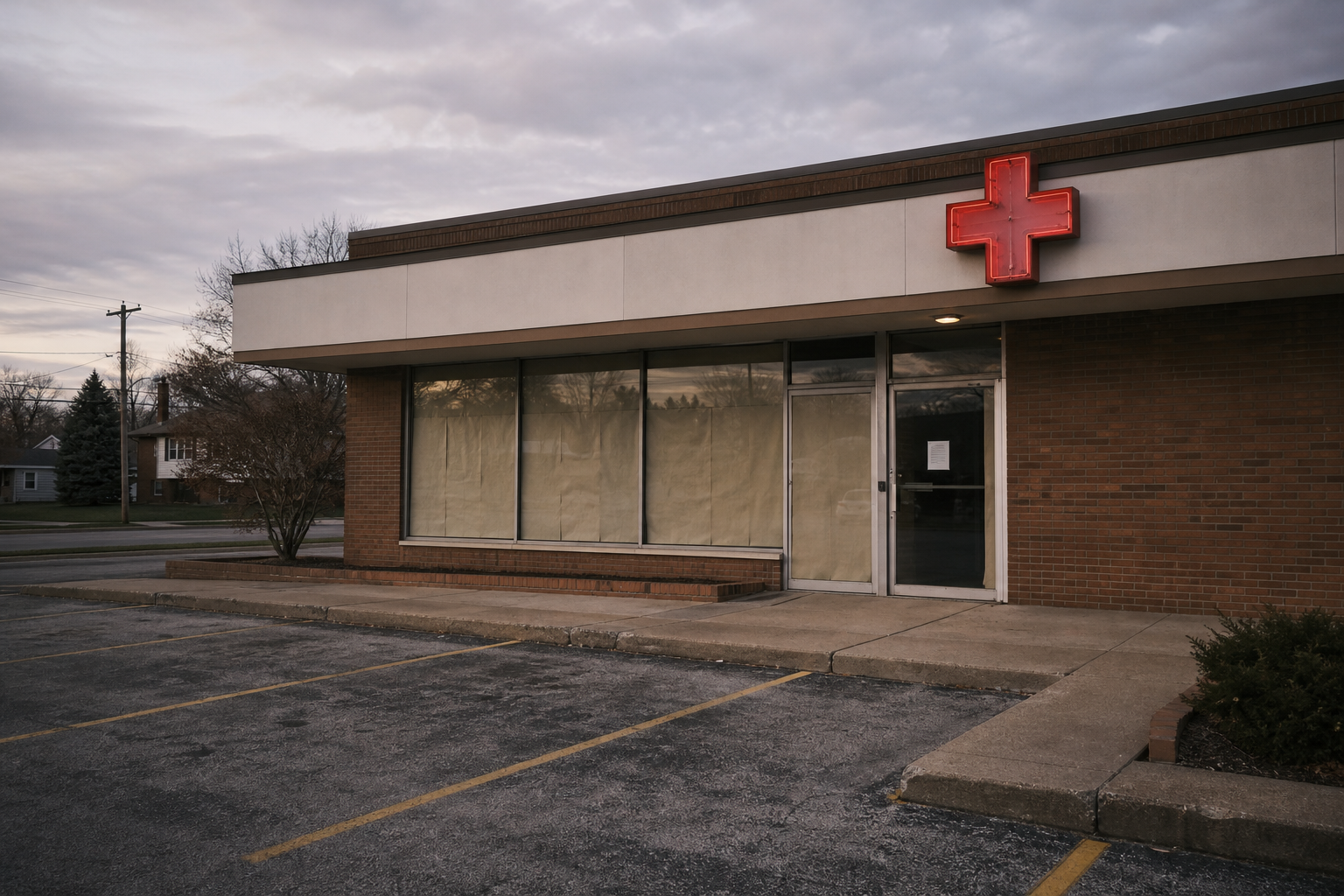
The drugstore on the corner has been a fixture of American towns for generations — the place to pick up blood pressure pills, get a flu shot, or ask a pharmacist a quick question without an appointment. In a growing number of communities, that fixture is gone.
Over the past several years, thousands of retail pharmacy locations have shut down across the country, a wave that has touched both small independent drugstores and outlets inside major chains. Industry trade groups and pharmacy associations have tracked the closures county by county, and the pattern that emerges is uneven: some neighborhoods lose a pharmacy and still have three more within a mile, while others are left with none at all.
The result is a growing list of places pharmacists and researchers have taken to calling “pharmacy deserts” — areas, often low-income, rural, or both, where the nearest drugstore is a long drive away. For people managing diabetes, heart disease, or other chronic conditions that require regular refills, that distance is not a minor inconvenience. Public health researchers have linked pharmacy access to medication adherence; when picking up a prescription requires an hour round trip instead of a walk down the street, people are more likely to skip doses or let refills lapse.
Why the Closures Are Happening
The reasons behind the closures are mostly structural, not local. Pharmacists and owners who have shut down stores point most often to reimbursement rates set by pharmacy benefit managers, the companies that sit between insurers, drug manufacturers, and pharmacies to negotiate what a pharmacy actually gets paid for filling a prescription. In many cases, pharmacy owners say, that reimbursement has fallen below what it costs to buy and dispense the drug — a gap sometimes called an “underwater” claim.
A handful of large pharmacy benefit managers control the vast majority of prescription claims processed in the United States, giving them significant leverage over what independent and chain pharmacies alike are paid. Because many pharmacies cannot negotiate those rates individually, a drugstore filling hundreds of prescriptions a month can find itself losing money on a meaningful share of them. Independent pharmacy owners have said this dynamic, more than slow foot traffic or online competition, is what has pushed them to close.
Chain pharmacies have cited different, though related, pressures: shrinking reimbursement combined with high labor costs and, in some cases, corporate decisions to consolidate overlapping locations after years of expansion. Several major chains have announced plans in recent years to close hundreds of stores nationwide, often without naming individual addresses until shortly before the shutdown.
Who Is Most Affected
Research on pharmacy access has generally found that closures hit certain communities harder than others. Rural counties, where a single pharmacy may serve an entire town and its surrounding farmland, are especially vulnerable — when that one store closes, residents may face a drive of twenty minutes or more to the next nearest option. Lower-income urban neighborhoods have also seen disproportionate closures, often in areas already served by fewer retail options of any kind.
Older adults and people with limited mobility or no access to a car are among the most exposed. Many pharmacies have historically served informally as a health care touchpoint for people who do not see a doctor regularly — a place to get blood pressure checked, ask about drug interactions, or get a vaccine without scheduling a clinic visit. When a pharmacy disappears, that informal access disappears with it, not just the ability to pick up a prescription.
What’s Being Done About It
State legislatures have taken notice. A number of states have passed or proposed laws aimed at regulating pharmacy benefit managers more directly, including rules requiring minimum reimbursement rates for independent pharmacies, bans on certain contract practices, or new reporting requirements intended to make the reimbursement process more transparent. The details vary widely by state, and enforcement has been inconsistent, but the general direction — more scrutiny of the intermediaries that set pharmacy pay — has been consistent across both Republican- and Democratic-led legislatures.
At the federal level, lawmakers in both chambers have introduced bills targeting pharmacy benefit manager practices, though comprehensive reform has moved slowly. Federal regulators have also opened inquiries into the business practices of the largest pharmacy benefit managers, examining whether their ownership ties to insurers and pharmacy chains create conflicts of interest that squeeze out independent competitors.
Some states and local governments have tried more direct interventions, including grant programs to help independent pharmacies stay open in underserved areas, or partnerships with community health centers to add pharmacy services where retail options have vanished. Mail-order prescriptions and pharmacy delivery services have expanded as well, offering a partial workaround for people who can manage logistics and are comfortable receiving medications by mail, though pharmacists note that model does not replace the in-person consultation many patients still rely on.
What Readers Can Do Now
For anyone whose local pharmacy has closed or is at risk of closing, pharmacy associations generally recommend a few practical steps: ask the closing pharmacy to transfer prescription records well before the shutdown date, confirm which nearby pharmacies accept the same insurance plan, and ask a new pharmacy to do a full medication review to catch any gaps introduced during the transition. Patients on complex medication regimens are often advised to build in extra time for the first refill at a new location, since transferring records and verifying insurance coverage can take longer than expected.
Whether the current wave of closures levels off or continues largely depends on decisions playing out far from any single Main Street — in statehouses debating pharmacy benefit manager rules, in federal agencies weighing new regulations, and in corporate offices deciding which stores stay open. For now, the map of pharmacy access in the United States is still being redrawn, store closure by store closure.